Buying a property for development can be exciting, especially on the Gold Coast where demand for housing, commercial space and well-located redevelopment opportunities remains strong.
A site may look like it has great potential, but what you can actually do with it depends on much more than land size or location. Zoning, overlays, access, servicing, flooding, environmental constraints and infrastructure requirements can all influence whether a project is feasible.
Before you purchase, design or lodge a development application, it is worth understanding the planning controls that apply to the site.
Early planning advice can help you identify opportunities, manage risk and avoid investing in a site that may not support your intended outcome.
Why planning due diligence matters
A development site can look straightforward on paper. It might be in a good location, have a large land area or sit near other recently developed properties.
However, every site is different.
The Gold Coast City Plan sets out how land can be used and developed across the City. It includes zoning, overlays, local area requirements and assessment benchmarks that guide what may be possible on a particular property.
For developers, investors and landowners, planning due diligence can help answer important questions early, including:
- What type of development is supported on the site?
- Is the proposal likely to need a development application?
- Are there overlays or constraints that may affect the design?
- Is the intended yield realistic?
- Are there infrastructure, access or servicing issues to consider?
- Could the site trigger additional technical reports or specialist input?
- Are there risks that may affect timing, cost or approval prospects?
Understanding these matters early can help you make a more informed decision before committing to a purchase or progressing detailed design.
Check the zoning
Zoning is one of the first planning checks for any development site.
A property’s zone helps determine the types of development that may be supported, the level of assessment that may apply and the general intent for that area.
On the Gold Coast, zoning may influence whether a site is suitable for outcomes such as:
- residential development
- subdivision
- dual occupancy or multiple dwellings
- mixed-use development
- commercial or centre activities
- industrial development
- community uses
- rural or environmental outcomes
- sports and recreation uses
However, zoning is only one part of the picture. A site may be in a zone that appears suitable for development, but other controls may still limit what can be achieved.
That is why zoning should always be considered alongside overlays, built form requirements, access, services and site-specific constraints.
Understanding overlays and site constraints
Overlays identify matters that may affect how land can be developed.
Depending on the property, overlays may relate to:
- flooding
- bushfire hazard
- biodiversity and environmental values
- landslide hazard
- acid sulfate soils
- heritage or character
- transport corridors
- airport or aircraft noise impacts
- coastal and waterway processes
- waterway and drainage constraints
An overlay does not always mean development cannot occur. However, it may affect the design response, approval pathway, level of assessment or supporting information required.
For example, a site affected by flood or environmental constraints may need additional technical input before a development application can be properly assessed. This can influence the layout, built form, infrastructure design, construction methodology and overall project feasibility.
Review density and built form controls
For residential and mixed-use sites, density and built form controls are critical.
These controls can influence:
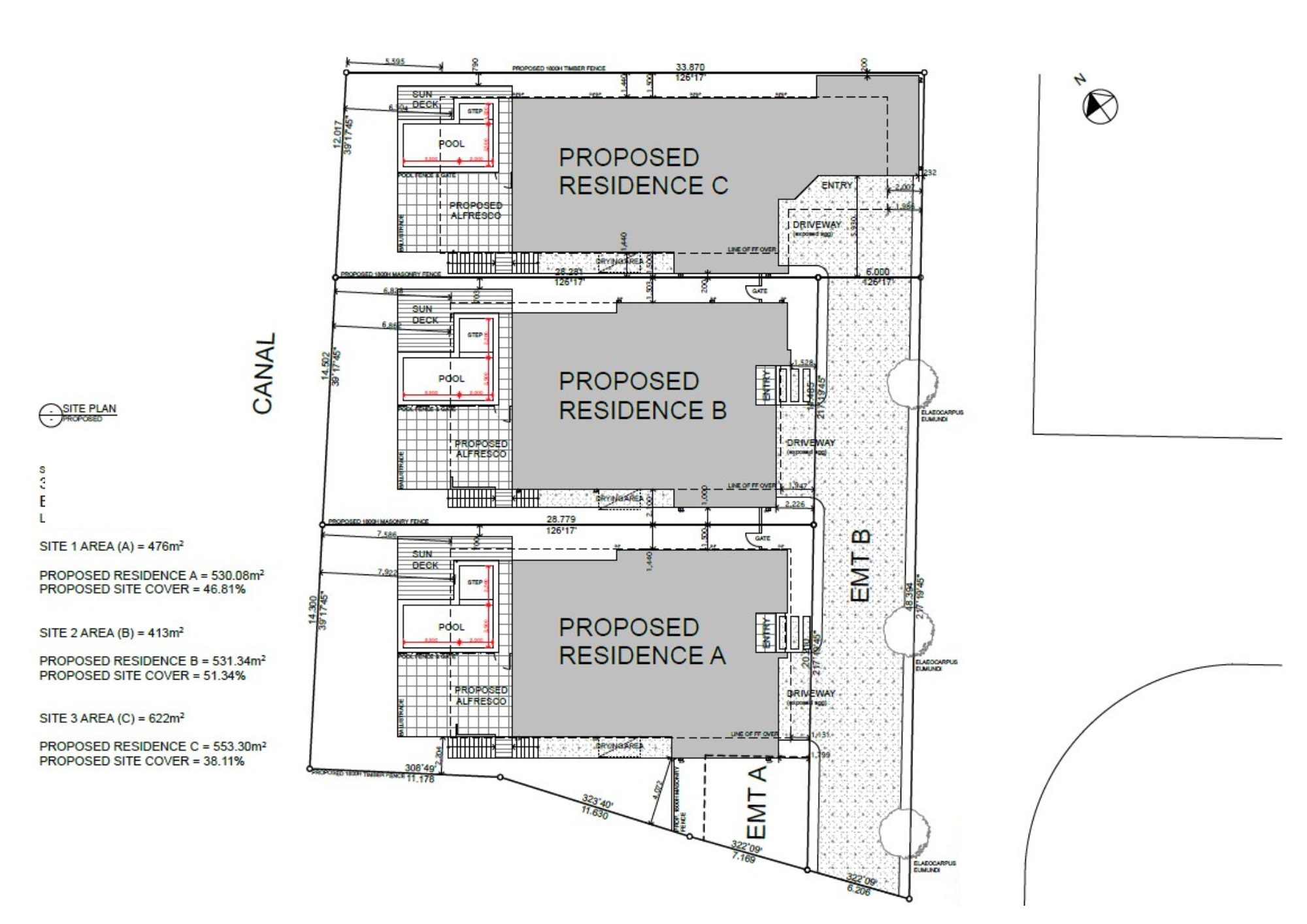
- the number of dwellings or lots that may be achievable
- building height
- setbacks
- site cover
- private open space
- car parking
- frontage requirements
- landscaping
- access and driveway design
- neighbourhood character outcomes
A common mistake is assuming that a site can achieve the same outcome as a nearby development. While surrounding approvals can provide useful context, they do not automatically confirm what is possible on another property.
Even sites in the same suburb can have different zoning, overlays, frontage, slope, servicing conditions or assessment requirements.
A proper planning review can help test whether the intended yield is realistic before significant money is spent on design.
Consider access and movement
Access can have a major impact on development feasibility.
Before committing to a site, it is important to consider how vehicles, pedestrians, cyclists, service vehicles and emergency vehicles will access and move through the property.
Key questions may include:
- Can safe and practical vehicle access be achieved?
- Is the site on a major road or near an intersection?
- Are there frontage constraints?
- Will the development need road upgrades or new access arrangements?
- Is there enough space for car parking and manoeuvring?
- Are there pedestrian or active transport requirements?
- Are there easements, road widening requirements or access limitations?
For some projects, traffic engineering or civil engineering advice may be required to confirm whether the proposed access arrangement is suitable.
Check services and infrastructure
A development site also needs to be considered from an infrastructure perspective.
This may include:
- sewer connections
- water supply
- stormwater management
- lawful point of discharge
- electricity and telecommunications
- road frontage and verge works
- easements
- existing infrastructure assets
- infrastructure charges
Servicing constraints can significantly affect project cost and design.
For example, a site may appear suitable for subdivision or redevelopment, but require stormwater upgrades, sewer extensions, access works or additional infrastructure coordination. These matters can influence feasibility and should be considered as early as possible.
Understand whether a development application is required
Not every project follows the same approval pathway.
Depending on the proposal and the site, development may be accepted, accepted subject to requirements, code assessable or impact assessable.
A development application may be required for matters such as:
- material change of use
- reconfiguring a lot
- operational works
- building work assessable against the planning scheme
- changes to existing approvals
- development affected by overlays or constraints
The approval pathway will depend on the City Plan, the type of development proposed and the specific characteristics of the site.
Getting early advice can help clarify what approvals may be required and what information is likely to be needed to support an application.
Look beyond the planning controls
Planning due diligence is not just about whether a use is supported.
A good feasibility review should also consider the broader project risks that may affect delivery.
This can include:
- title constraints and easements
- existing approvals over the land
- infrastructure charges
- likely referral requirements
- environmental approvals
- potential community or neighbour impacts
- construction constraints
- staging opportunities
- likely consultant inputs
- approval timeframes
- conditions that may affect cost or delivery
These matters can make a significant difference to whether a site is commercially viable.
When should you get planning advice?
Ideally, planning advice should be sought before committing to a purchase, finalising a concept design or lodging a development application.
Early advice is particularly useful if you are:
- buying a site for development
- considering subdivision
- testing townhouse, duplex or multiple dwelling potential
- looking at a commercial or mixed-use opportunity
- reviewing a site with overlays or environmental constraints
- trying to understand why a nearby property was approved for development
- unsure whether your proposal needs a development application
- seeking to understand the likely risks, timing and consultant inputs
The earlier these matters are identified, the easier they are to manage.
Planning advice to suit your project
Not every site requires the same level of review.
Some projects may only need a simple planning snapshot to confirm the key controls, likely approval pathway and obvious site constraints. Others may require a more detailed feasibility assessment, particularly where there are multiple development options, complex overlays, infrastructure considerations or commercial decisions to be made.
Depending on your needs, Planit can provide planning advice at different levels, including:
- an initial consultation to understand your site, goals and the type of advice required
- a planning snapshot outlining key zoning, overlay and approval considerations
- a simple feasibility assessment for early-stage decision-making
- a more detailed feasibility report for complex sites, multiple options or investment decisions
- development application advice, preparation and lodgement support
- coordination with civil engineering, environmental, ecology and other technical inputs where required
This approach allows the scope and fee to be tailored to the project, rather than applying a one-size-fits-all process.
How Planit can help
Planit Consulting provides town planning, civil engineering, environmental, ecology and project management services across the Gold Coast and South East Queensland, and New South Wales with offices also in Kingscliff and Lennox Head.
Our multidisciplinary team can help landowners, developers and project teams understand what a site can support before progressing too far into purchase, design or lodgement.
We can assist with:
- planning due diligence
- zoning and overlay checks
- development feasibility advice
- site constraint investigations
- subdivision and redevelopment advice
- development application preparation
- civil engineering input
- stormwater, access and servicing considerations
- environmental and ecology advice
- Council liaison
- coordination with architects, surveyors, certifiers and other consultants
Before you commit to a development site, it is worth getting clear advice on the planning controls, approval pathway and site constraints that may affect your project.
Considering a development site on the Gold Coast? Get in touch with Planit Consulting to discuss the right level of planning advice for your site, from an initial planning snapshot through to detailed feasibility reporting.